Compression Fracture of the Spine in Children: Care Instructions
Overview
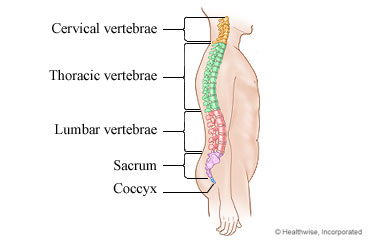
When the front part of a bone in the spine breaks and collapses, it is called a compression fracture. A fall
or other accident can cause this kind of break.
Treatment will focus on controlling pain. Some children need to wear a brace.
Surgery may be done if the pain does not go away or if the bone presses on the spinal cord or nerves.
Most of these breaks heal in 8 to 10 weeks. After that, your child will probably need physical therapy.
Healthy habits can help your child heal. Give your child a variety of healthy foods. And don't smoke around
your child.
Follow-up care is a key part of your child's treatment and safety. Be sure to make and go to all
appointments, and call your doctor if your child is having problems. It's also a good idea to know your
child's test results and keep a list of the medicines your child takes.
How can you care for your child at home?
-
Be safe with medicines. Give pain medicines exactly as directed.
-
If the doctor gave your child a prescription medicine for pain, give it as prescribed.
-
If your child is not taking a prescription pain medicine, ask your doctor if your child can take an
over-the-counter medicine.
-
If your child needs a brace, make sure it's used the way your doctor told you. Your child must wear it
until the doctor tells you it is okay to stop.
-
Don't let your child do any physical activities unless your doctor says it is okay.
When should you call for help?
 Call 911
anytime you think your child may need emergency care. For example, call if:
Call 911
anytime you think your child may need emergency care. For example, call if:
Call your doctor now or seek immediate medical care if:
Watch closely for changes in your child's health, and be sure to contact your doctor if:
Current as of: July 17, 2023
Content Version: 14.0
Care instructions adapted under license by your
healthcare professional. If you have questions about a medical condition or this instruction, always ask
your healthcare professional. Healthwise, Incorporated disclaims any warranty or liability for your use of
this information.